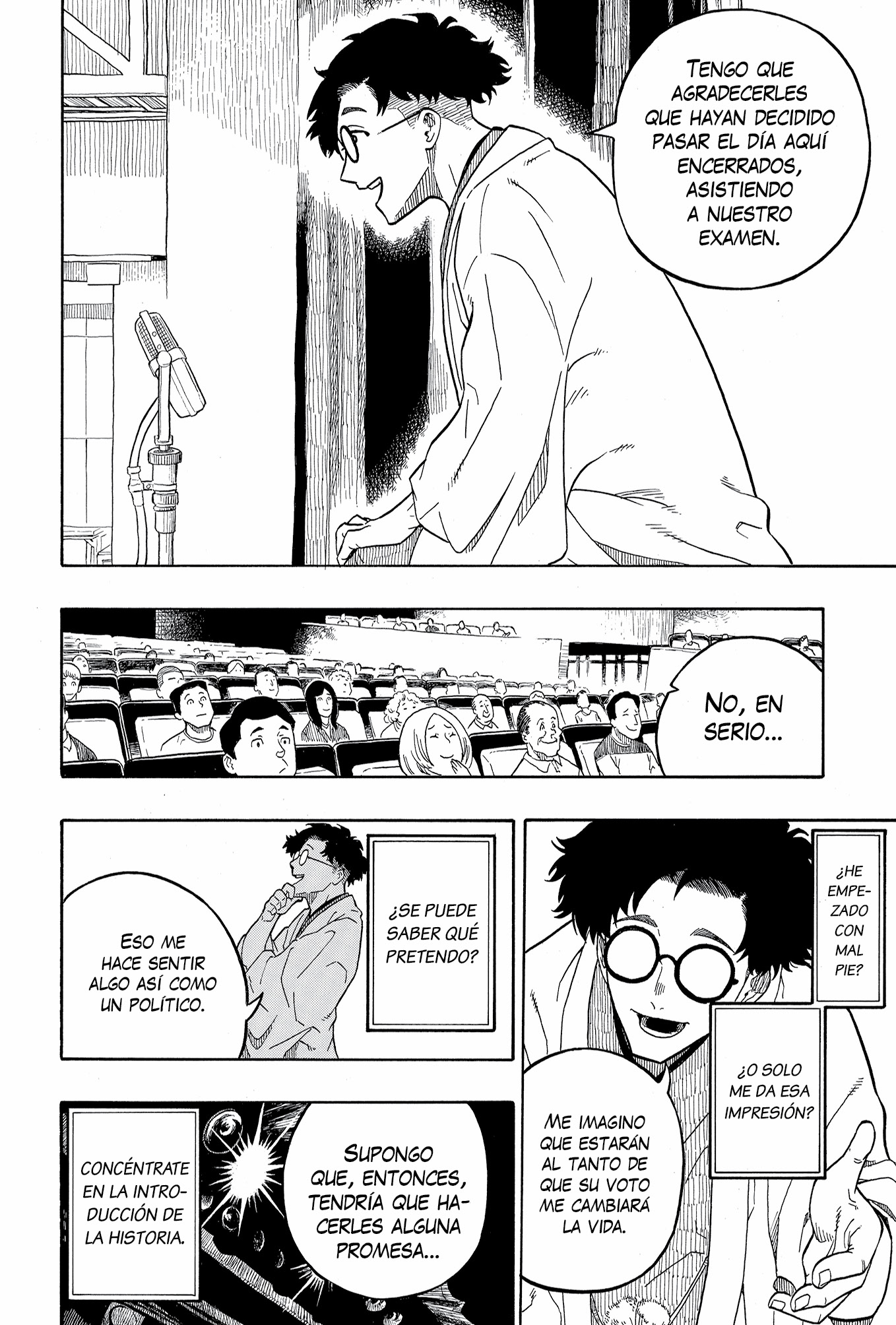
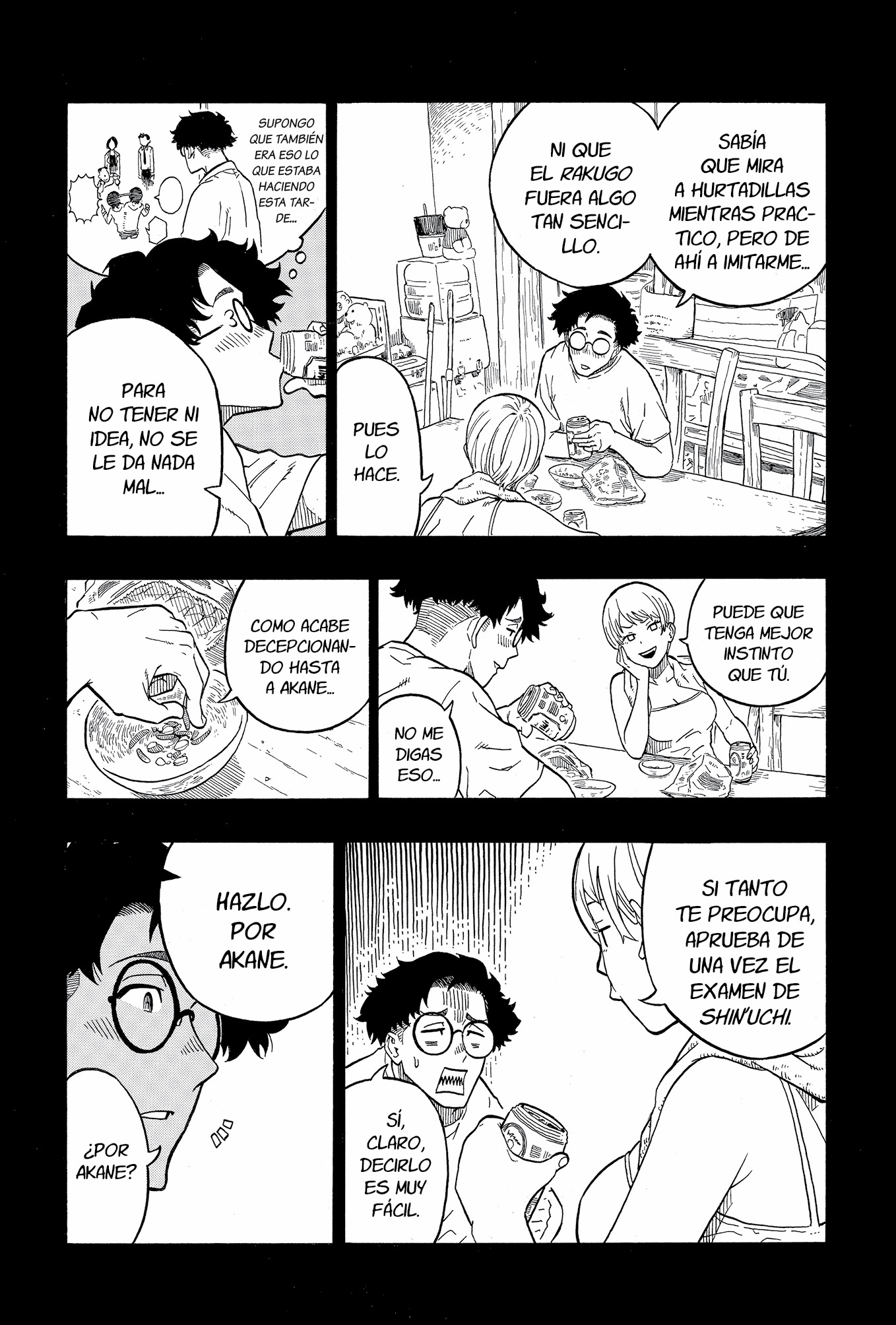
Akane-banashi (Japanese: あかね噺, "Akane's Story") is a Japanese manga series written by Yuki Suenaga and illustrated by Takamasa Moue. It follows teenager Akane Osaki as she aims to reach the highest rank in rakugo, partly to avenge her father, who was expelled from the profession six years earlier. The rakugo in the series is supervised by professional rakugoka Kikuhiko Hayashiya. Akane-banashi has been serialized in Shueisha's shōnen manga magazine Weekly Shōnen Jump since February 2022, with the chapters collected into 16 tankōbon volumes as of April 2025. Viz Media has licensed the series for English release in North America.
Akane-banashi has received a positive reception from reviewers and has been nominated for various awards.
Plot
Growing up, Akane admired her father and his rakugo, a traditional Japanese form of storytelling where a lone performer, called a rakugoka, depicts a long, complicated, and usually funny story involving multiple characters, who are distinguished by changes in pitch, tone, slight turns of the head, and hand movements, all while sitting in place. But when she was in elementary school, her father and all the other applicants were expelled from the Arakawa School during the promotional test to obtain rakugo's third and highest rank of shin'uchi. Six years later, Akane, who had been secretly receiving lessons from her father's former master, sets out to become a shin'uchi of the Arakawa School to avenge her father and prove rakugo is a legitimate profession.
Characters
Osaki family
- Akane Osaki (桜咲朱音, Osaki Akane) / Akane Arakawa (阿良川朱音, Arakawa Akane)
- Voiced by: Akane Yamaguchi
- A 17-year-old high school girl with a love of rakugo that she developed while watching her father, a former rakugoka. As a child, she got angry whenever a classmate or their parents looked down on her father for his chosen career, and hates that he was forced to give up his dream and get a "real job". Akane becomes a formal rakugoka apprentice, starting at the first rank known as zenza after graduating high school, under Shiguma Arakawa (VI).
- Tohru Osaki (桜咲徹, Osaki Tohru) / Shinta Arakawa (阿良川志ん太, Arakawa Shinta)
- Voiced by: Kappei Yamaguchi
- A former rakugoka who used the stage name "Shinta Arakawa" while studying under Shiguma Arakawa (VI); he was expelled following his shin'uchi promotion test. Before the shin'uchi test, he participated in futatsume events with his friends Chocho Konjakutei and Taizen Arakawa. After leaving the Arakawa School, he became a salaryman, selling concrete.
Arakawa School
Arakawa masters
- Issho Arakawa (阿良川一生, Arakawa Issho)
- Voiced by: Yuki Tamai
- The top-ranked master and head of the Arakawa School, who is considered one of the greatest rakugoka of his generation. Six years ago, he was the chief judge who expelled Akane's father and the other shin'uchi applicants. He is the first-born son of the Kurogane family who was disowned for his vow of independence, and later worked at Soba Shop Kikuhiko with Shiguma (VI). Educated in the Kashiwaya school as Kisoba Kashiwaya (柏家生そば, Kashiwaya Kisoba).
- Shiguma Arakawa (阿良川志ぐま, Arakawa Shiguma) (VI)
- Voiced by: Takuya Saito
- The number two master of the Arakawa School who specializes in sentimental tales of the ninjo-banashi style and who taught Akane's father. After Shinta was expelled, Shiguma felt unfit to take on any more pupils. But he has been secretly teaching Akane rakugo for the last six years, and agrees to formally take her on as a pupil after she graduates high school, which is unusually late. Grew up without formal education in the backstreets of Tokyo, later working at Soba Shop Kikuhiko with Issho. Born as Yosuke Shiranami (白波洋輔, Shiranami Yōsuke), he was educated in the Kashiwaya school as Rokuen Kashiwaya (柏家禄ゑん, Kashiwaya Rokuen) and later inherited the legendary myoseki stage name of his master, Shiguma Arakawa V (formerly Kiroku Kashiwaya), who also founded the Arakawa School.
- Ikken Arakawa (阿良川一剣, Arakawa Ikken)
- The media-savvy master of the Arakawa School who also acts in the television drama Yin-Yang Cops. He is billed as the brains behind the Arakawa School.
- Zensho Arakawa (阿良川全生, Arakawa Zenshō)
- Zensho holds a grudge against Shiguma; he is honest to his feelings.
- Taizen Arakawa (阿良川泰全, Arakawa Taizen)
- Nicknamed "The Furious". Before becoming a shin'uchi, he participated in futatsume events with his friends Shinta Arakawa and Chocho Konjakutei. After he tearfully begged Zensho for Shinta's reinstatement, Zensho made him feel responsible for the expulsion by telling him Issho faulted Taizen for not making a larger impact like Chocho after Taizen was promoted to shin'uchi, the year before the disastrous test.
- Maikeru Arakawa (阿良川まいける, Arakawa Maikeru)
- The most senior pupil under Master Shiguma after Shinta was expelled. He fancies himself a ladies' man. During the story, he passes his shin'uchi test.
- Shiguma Arakawa (阿良川志ぐま, Arakawa Shiguma) (V)
- The founder of the Arakawa School; he was the master of both Issho (Kisoba) and Shiguma VI (Rokuen) in the Kashiwaya school and formerly used the stage name Kiroku Kashiwaya (柏家生禄, Kashiwaya Kiroku) before he was expelled and revived the myoseki name Shiguma Arakawa, as the fifth to take that name. Served as an officer in the Japanese military during World War II at Rabaul.
Arakawa students
- Guriko Arakawa (阿良川ぐりこ, Arakawa Guriko)
- Voiced by: Masayuki Suzuki
- Master Shiguma's youngest pupil until Akane; he joined shortly before Shinta was expelled and just recently reached rakugo's second rank of futatsume. Assigned to Taizen while Shiguma recovers.
- Kyoji Arakawa (阿良川享二, Arakawa Kyōji)
- A 28-year-old futatsume in his ninth year of rakugo under Master Shiguma. Ever since Shinta was expelled, Kyoji is the disciplinarian who keeps the other pupils in line. His seriousness makes the back-and-forth banter in his rakugo even funnier. He is a lightweight, and gets drunk after one sip of alcohol. He offers to take Akane under his wing. Educated in the Kashiwaya school as Kiyoichi Kashiwaya. Assigned to Zensho while Shiguma recovers.
- Koguma Arakawa (阿良川こぐま, Arakawa Koguma)
- A 29-year-old futatsume in his 11th year of rakugo under Master Shiguma. He is a Tokyo University graduate and the Shiguma School's best terakoya; master of old literary teachings. He meticulously researches every rakugo story he performs, including the daily customs of the period it came from, and turns into a completely different person onstage as far as his appearance and demeanor. Assigned to Ikken while Shiguma recovers.
- Kaisei Arakawa (阿良川魁生, Arakawa Kaisei)
- An obnoxious futatsume under Master Issho. He reached that rank at 19-years-old, after only two years of zenza apprenticeship. He is particularly skilled at portraying seductive characters, which makes his silly ones stand out even more. Initially knew Issho as a regular patron of his mother's bar who helped with her hospital bills.
- Hikaru Arakawa (阿良川ひかる, Arakawa Hikaru)
- Hikaru competed with Akane and Karashi in the Karaku Cup as Hikaru Koragi; specializes in "heart-warming rakugo" and the heretical "eight blind men" technique, which draws upon her strengths as a voice actress. She is a zenza studying under Master Ikken.
- Kaichi Arakawa (阿良川嘉一, Arakawa Kaichi)
- Kaichi is one of the finalists in the Arakawa zenza renseikai event. He is in his 30s, a former salesman who was inspired by Master Issho to leave his job and make his audiences happy; officially, he is Akane's junior, as he joined the Arakawa School later than she did.
- Taison Arakawa (阿良川泰そん, Arakawa Taison)
- Taison is a new zenza student of Arakawa school under Master Taizen. He joined the school in the 3 years timeskip when Akane was in France.
Other schools
Sanmeitei
- Karashi Sanmeitei (三明亭からし, Sanmeitei Karashi)
- Karashi competed with Akane and Hikaru in the Karaku Cup as Karashi Nerimaya; specializes in "adapted rakugo", which takes a classic story and adds modern elements. He is a zenza studying under master Enso Sanmeitei (三明亭円相, Sanmeitei Enso).
Ransaika
- Urara Ransaika (蘭彩歌うらら, Ransaika Urara)
- Master Urara Ransaika is an ookanban, a superstar capable of filling a venue on the basis of her name alone. Urara is the sole apprentice of Sharaku Ransaika (蘭彩歌しゃ楽, Ransaika Sharaku) "The Unteaching", who believed no one could properly inherit his art until he met her. Sharaku performed kuruwa-banashi, rakugo set in brothels, which emphasized the importance of dialogue and conversation, and Urara's seductive manner is capable of immersing the audience fully into those settings. Has known Issho/Kisoba, Shiguma (V)/Kiroku, and Shiguma (VI)/Rokuen since 1964, when they met after she was accosted by the son of a yakuza kumichō (family head).
Konjakutei
- Chocho Konjakutei (今昔亭ちょう朝, Konjakutei Chōchō)
- Master Chocho Konjakutei was the youngest to ever be considered an ookanban headliner. He is an inveterate gambler, choosing the story he will perform just before taking the stage, based on a roll of the dice. Before becoming a shin'uchi, he participated in futatsume events with his friends Shinta Arakawa and Taizen Arakawa.
- Asagao Konjakutei (今昔亭朝がお, Konjakutei Asagao)
- Asagao was the senior (tate) zenza at the Yasaka-tei theatre when Akane arrived for her initial training. At that time he was a zenza known to have a hot temper, which cost him a chance for a futatsume promotion after he punched Rien Konjakuan for insulting his master. Later, he is promoted to futatsume at a debut with Akane, Taizen, and Chocho.
Tsubakiya
- Hassho Tsubakiya (樁家八正, Tsubakiya Hasshō)
- Master Hassho Tsubakiya prefers his cushion to be precisely 80 cm (31 in) from the microphone and performs in a gentle manner. He takes great pride in the craft of rakugo and does not wish to see the art cheapened by revenge stunts.
- Shomei Tsubakiya (樁家正明, Tsubakiya Shōmei)
- Shomei Tsubakiya is a rare ookanban whose myoseki name is hereditary, passed on from father to son. The current Shomei is vice-chair of the Rakugo Federation.
Kashiwaya
- Miroku Kashiwaya (柏家ミ禄, Kashiwaya Miroku) (V)
- Master Miroku Kashiwaya (V), aka "The National Treasure", was a zenza alongside Urara, Shiguma, and Issho. He is the fifth to take the name "Miroku"; these myoseki stage names are established by legendary rakugoka and passed down within a school.
- Rokuru Kashiwaya (柏家禄郎, Kashiwaya Rokurō)
- Rokuru Kashiwaya, aka "The Wonder Child", believes the sound of rakugo is paramount and styles his performances after musicians, including John Coltrane; on "Coltrane days", the story begins in a gentle manner and ends aggressively. He defended Akane from unfair criticism by Rien Konjakuan and warned that her revenge strategy would have repercussions.
Konjakuan
- Rien Konjakuan (今昔庵りゑん, Konjuakuan Rien)
- Rien Konjakuan is an inconsiderate futatsume nicknamed "the rookie-crusher" for making unreasonable demands of zenza. He has held a grudge against Akane for years after she ridiculed him during one of her first performances.
Other rakugo-related people
- Gakumon Saito (斎藤学問, Saitō Gakumon)
- Gakumon-sensei is a traditional art critic who served as a judge for the zenza renseikai event held by the Arakawa school. His granddaughter (daughter of his daughter), Emilie Dupont, lives in Paris and helped Akane when she was sent to Europe for training by Issho.
- Kimihisa Kashio (樫尾公久, Kashio Kimihisa)
- Kimihisa is a writer for Monthly Rakugo, a magazine covering the events of rakugo.
Production
Author Yuki Suenaga stated that Akane-banashi originated with Akane, a character he created but did not know what to do with. A fan of manzai and conte, he was interested in rakugo, but felt it was too difficult to get into. Suspecting there were many people who felt the same way, and that it would be unexpected of the character, he decided to have Akane perform rakugo. Suenaga stated that because he is new to rakugo, he is able to predict the things readers might not know, and can depict them in the manga in a way they will understand. The serialization of Akane-banashi was proposed in the fall of 2021. With the help of rakugoka Keiki Hayashiya, who supervises the rakugo in the manga, Suenaga interviewed more than 20 rakugoka, including Momoka Chokaroh and Miyaji Katsura.
Artist Takamasa Moue said when he first heard about the series he found it interesting, but worried whether readers of Weekly Shōnen Jump would be interested in rakugo. Realizing it was his job to make them interested, he said he tried to get readers emotionally invested in the characters, and to broaden the scope to appeal to those unfamiliar with rakugo. Having previously only had a passing interest in rakugo, Moue said he had fun researching it for Akane-banashi. To draw the rakugo scenes in the manga, Moue listens to a performance of the relevant story and thinks about how to convey the speed and intonation.
Gendai Business columnist Kenichiro Horii wrote that Akane-banashi's Arakawa School is clearly modeled after the real-life Tatekawa School of rakugo, whose master, Danshi Tatekawa VII, expelled a group of zenza in 2002, after feeling that they were not showing enough effort to reach futatsume. Although Kazuhiro Ito of Good Life with Books also noted the similarities, he reported that Suenaga stated Issho Arakawa was instead modeled after Enshō Sanyūtei VI. Horii also pointed out that the Rakugo Cafe seen in the series is modeled after a real café with a similar name in Jinbōchō, Tokyo. According to Hayashiya, the Yasaka-tei and Edobashi-tei theaters in the manga were modeled after Suehiro-tei in Shinjuku and the Oedo Nihonbashi-tei in Nihonbashi, respectively. For the colored title page of chapter 29, Moue was inspired by The Breakfast Club. The Shikisai Festival seen in the manga was modeled after the Rakugo Association's Sharakusai Festival. The story "Giboshi" that is depicted in chapter 87 is a little-known rakugo story that was revived by Kyotaro Yanagiya. Suenaga stated that he received permission to use it in Akane-banashi.
Publication
Written by Yuki Suenaga and illustrated by Takamasa Moue, Akane-banashi began serialization in Shueisha's shōnen manga magazine Weekly Shōnen Jump on February 14, 2022. The rakugo in the series is supervised by professional rakugoka Keiki Hayashiya. Publisher Shueisha is collecting the individual chapters into tankōbon volumes, with the first released on June 3, 2022.
Both Shueisha and Viz Media began releasing the series in English digitally the same day it began in Japan, the former on its Manga Plus website and application. Viz began publishing Akane-banashi in print in summer 2023.
Volumes
Chapters not yet in tankōbon format
These chapters have yet to be published in a tankōbon volume. They were serialized in Weekly Shōnen Jump.
Other media
The first chapter of Akane-banashi received a motion comic adaptation, where voice actors, music and sound effects are heard as the manga images appear on screen. It was uploaded to Jump Comics' official YouTube channel in two parts on June 4 and 5, 2022. Akane and her father are voiced by Akane and Kappei Yamaguchi. In addition to being actual daughter and father, the Yamaguchis are also both rakugoka.
Reception
By September 2022, the collected volumes of Akane-banashi had over 200,000 copies in circulation and volume one had been reprinted four times. With the release of volume 10 in March 2024, the manga had 1.5 million copies in circulation. The series has been recommended by Eiichiro Oda and Hideaki Anno. It was nominated for the 2022 Next Manga Award in the print manga category and ranked third out of 50 nominees. The series ranked fourth in the 2023 edition of Takarajimasha's Kono Manga ga Sugoi! list of best manga for male readers. It ranked third in the Nationwide Bookstore Employees Recommended Comics of 2023. Akane-banashi ranked second in the 16th Manga Taishō, losing to Kore Kaite Shine by two points. It was also nominated for the 47th Kodansha Manga Award in the shōnen category in 2023. The New York Public Library included Akane-banashi on its 2023 list of the Best Books for Teens. Anime News Network's Richard Eisenbeis chose it as the Best New Manga of 2023, while Brigid Alverson of School Library Journal included it as one of the Top 10 Manga of 2023. The Young Adult Library Services Association included the first volume of Akane-banashi on its 2024 list of Great Graphic Novels for Teens. In 2024, Stephen Paul's English translation of the series for Viz Media was nominated for Best Translation at the inaugural American Manga Awards, which is co-organized by Anime NYC and Japan Society.
Steven Blackburn of Screen Rant praised the first chapter of Akane-banashi. He wrote that the sudden shift in protagonists from Shinta, "a stereotypical hero who embodies everything that makes a successful shonen [manga]", to Akane, an unconventional hero who is essentially a wunderkind, already makes the latter character compelling. "That's a difficult dynamic to achieve, but Akane-banashi has somehow succeeded before it's even begun". In a review for Multiversity Comics, Zach Wilkerson gave the "immensely charming and well crafted" first chapter an 8.5 rating, with particular praise for Moue's art. Robbie Pleasant of the same website strongly praised the series and its art for successfully conveying how a performer's demeanor and voice changes as they perform different characters, despite manga being a static and soundless medium.
In May 2022, Kota Mukaihara of Real Sound wrote that Akane-banashi was poised to be a breakout hit. He felt that although Akane's progress in rakugo seemed to be going unusually fast and smooth, with her not yet being confronted by a tough challenge or failing at something, this allows readers to follow her growth without unnecessary stress. Mukaihara speculated that, while this could simply be because the manga was still new and needed to develop quickly in order to gain momentum, it emphasizes Akane's cleverness and the depth of her determination and is a testament to the charm of the characters and the skill with which the story is written. He also wrote that while Akane's outgoing personality and unprecedented skill make her seem like a maverick, her positivity and down-to-earth nature make her a likable character. Blackburn's colleague Ben Sockol praised later chapters of the series for "subverting the classic tournament arc trope", writing that Akane-banashi feels fresh and different from anything else in Weekly Shōnen Jump and is one of the most exciting manga currently running in the magazine as of June 2022.
Notes
References
External links
- Akane-banashi on the official Weekly Shōnen Jump website (in Japanese)
- Akane-banashi on Manga Plus
- Akane-banashi on the official Viz Media website
- Akane-banashi Voice Comic (part 1) on YouTube (in Japanese)
- Akane-banashi Voice Comic (part 2) on YouTube (in Japanese)
- Akane-banashi at Anime News Network's encyclopedia